
What is literacy?
Literacy is the skill of gaining information from the written word and being able to communicate that information to others both verbally and in writing. Literacy allows individuals to expand their knowledge and develop a deeper understanding of the world around them.
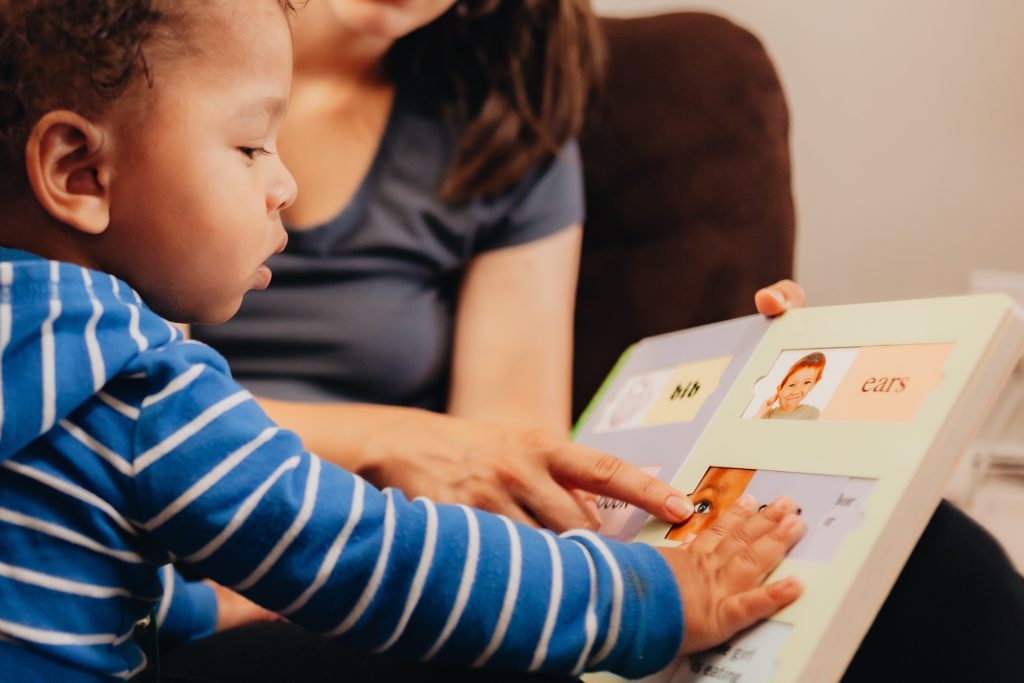
Building literacy as a skill in children can be accomplished in a number of ways, one of which is being read to beginning in infancy. Literacy in children can also start with them hearing spoken words that carry meaning. Some parents even start off reading aloud while their child is still in the womb.
Why is early literacy important?
Many might have questions about why this is so beneficial for children, and there are a couple of reasons why. One reason is that it supports vocabulary during the early stages of development as well as helps the child’s reading comprehension in the future. Literacy promotes the ability to understand ideas and to problem solve; it also helps children develop independence.
Reading can be beneficial to children at all ages and stages of development. When parents or caregivers provide opportunities for reading, they provide an opportunity to stimulate a child’s imagination. This allows children the chance to apply their knowledge to the world. For example, reading about butterflies allows children to use that information when they are outdoors. Reading and literacy help children connect new ideas to what they already know. Children can even develop ways to socialize with peers and create their own self- expression.
Literacy can go beyond reading books to children.
How can I improve my child’s literacy skills?
- Singing: Singing songs like “Wheels on the Bus,” or “Old MacDonald Had a Farm.”
- Talking: Engaging in conversations with children helps to foster language, which is used to understand literacy.
- Playing: Children learn through play. While playing, talk to your child about what you are playing with. For example, “the airplane goes high in the sky!” With older children, try asking open-ended questions to allow the child to think and develop more language for literacy skills.
- Storytelling: Telling stories such as the story of the three little bears supports literacy development.
- Labeling Items: Having basic items labeled as what they are around the home can help with literacy. For example, label a chair, the mirror, or a door. Even if a child can’t read yet, labeling items introduces letters that are used to make a word, which then is used to form a sentence in the future.
Thanks for reading!
If you have any questions on how to increase your child’s skills, email navigation@familyfutures.net.
